Why Chair Yoga Is Harder on a Soft Chair Than a Hard One
Quick Answer: A soft seat lets your pelvis sink and roll backward, which rounds the lower back and removes the stable base every seated movement depends on. A firm, flat seat at a height where your knees sit level with or just below your hips gives you a pelvis you can move from — which makes the same sequence feel easier and work better.
You practise in the armchair because it is comfortable and it is where you already sit.
Everything feels stiff, your back aches by the third pose, and you assume that is just how your body is.
Try the dining chair once. The difference is not subtle.
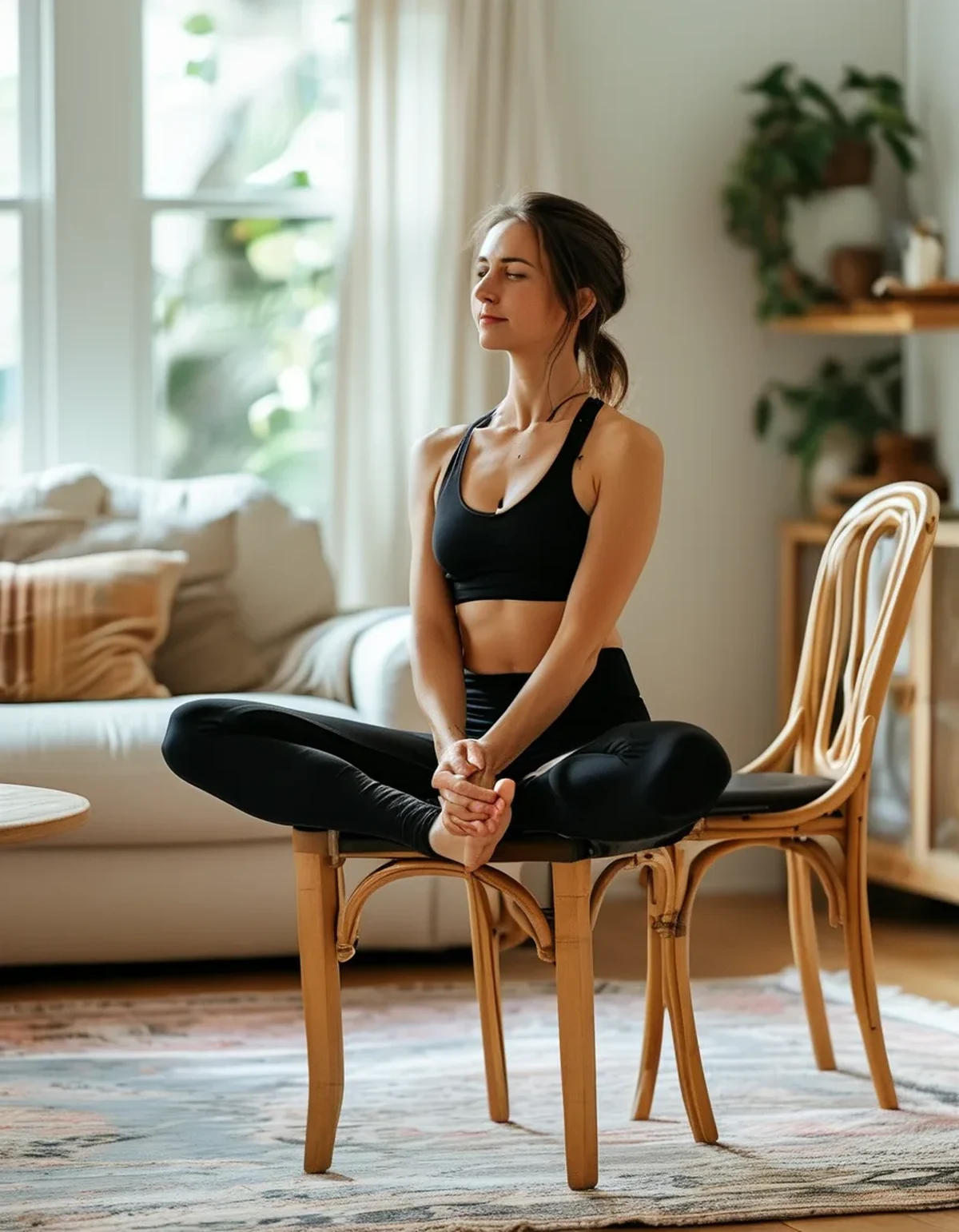
Why does the chair make so much difference?
Because in seated work the chair is your foundation, and a soft foundation cannot transmit anything.
When you sit on a firm flat surface, your sitting bones — the two bony points at the base of your pelvis — make direct contact and give you a stable, feelable base. You can rock forward and back on them, and that small movement is what every seated spinal movement starts from.
On a soft cushion, three things happen at once:
The sitting bones sink unevenly. Cushions compress more where pressure is highest, so your pelvis settles into a hollow and you lose the ability to shift on it.
The pelvis rolls backward. Soft seats are usually slightly dished, which tips the pelvis into a tucked position. From there the lumbar spine is already rounded, and any attempt to lengthen or twist starts from a compromised position.
Your feedback disappears. You cannot feel where your weight is, so you cannot correct it. Much of what makes seated practice effective is small continuous adjustment, and that requires being able to sense the base.
The net effect is that a twist that would rotate cleanly from a firm seat instead comes mostly from the shoulders, and a forward fold that should hinge at the hip instead rounds through the back. Same intention, much less benefit, more discomfort.
What does the right chair look like?
Five things, in order of importance:
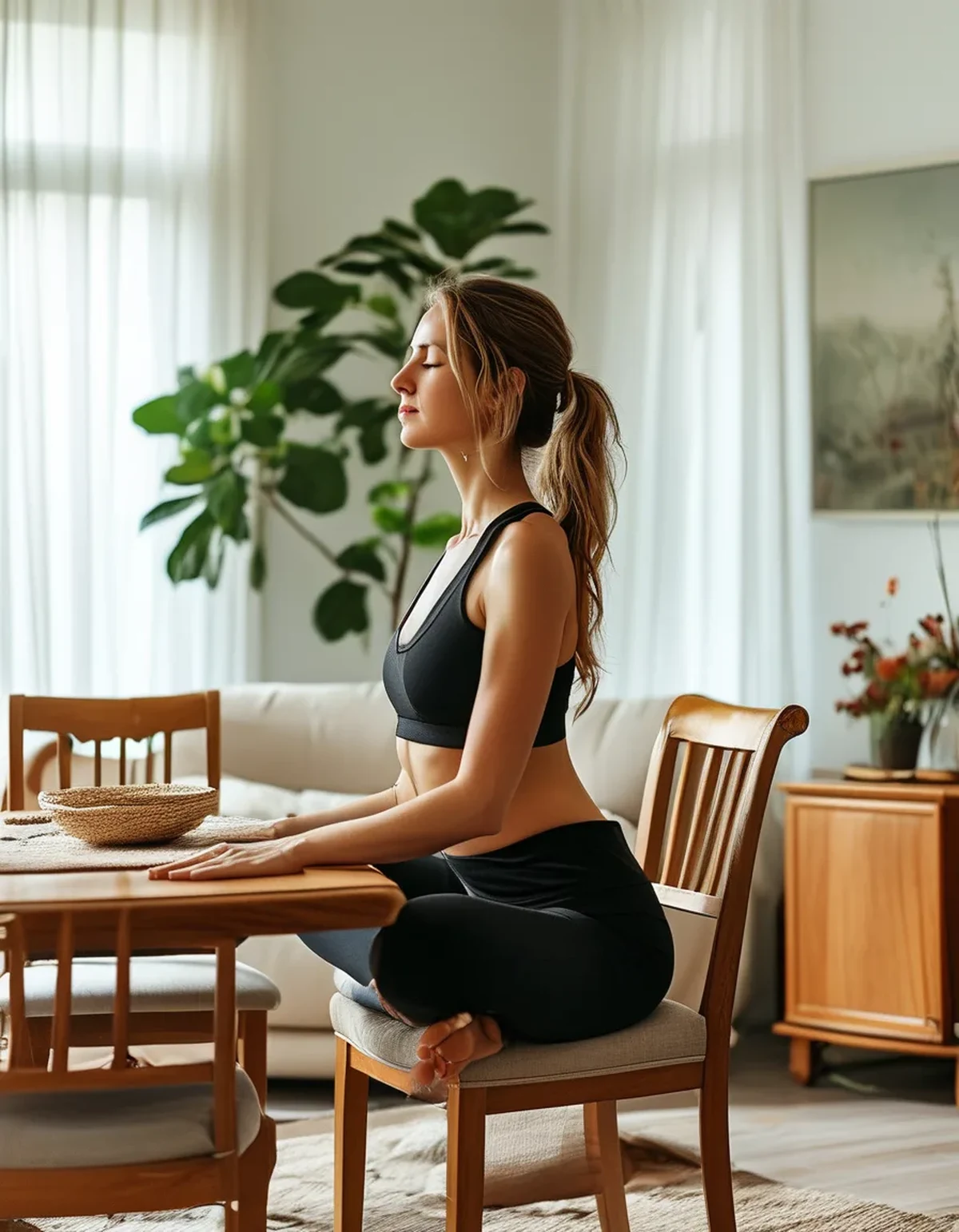
Firm and flat. A dining chair, a kitchen chair, or a desk chair with the seat height locked. If the only firm chair is slightly hard, a thin folded towel is fine — a compressible cushion is not.
Height so knees sit level with or slightly below the hips. This is the second most important factor. If your knees are higher than your hips, your pelvis is already tucked before you begin. If the chair is too low, sit on a folded blanket to raise yourself. If it is too high, put a book or two under your feet.
Feet flat on the floor. Both of them, taking real weight. Dangling feet remove a large part of your stability and force the lower back to compensate.
No arms, or arms you can ignore. Armrests restrict lateral movement and twists, and they invite you to push through your hands rather than work from your centre.
Stable, non-rolling. Office chairs on castors move exactly when you need them not to. If it is the only option, wedge it against a wall.
Sit toward the front third of the seat rather than back against the rest for most active work. The backrest is for support in restorative poses, not for holding you up during movement.
What Nobody Tells You About Seated Practice
The chair height changes which poses are even available to you, and nobody mentions this because most instruction assumes a standard chair.
Too low a chair blocks forward folds. With knees above hips, the thigh already occupies the space your torso needs to fold into. You will hit a hard stop early and feel it as tight hamstrings when it is actually a geometry problem.
Too high a chair blocks twists. With feet dangling and no floor contact, you cannot anchor the lower body, so a twist turns into a shoulder rotation and the mid-back never participates.
The perfect height for one person is wrong for another, which is why group chair yoga classes often produce very different experiences at the same session. If a pose has never worked for you, try it once with the seat height changed by two inches before concluding your body will not do it.
There is a second thing worth knowing. The chair that is best for practice is rarely the one that is best for sitting all day. A firm flat dining chair is excellent for twenty minutes of movement and unpleasant for four hours of work. Using two different chairs for two different jobs is normal, and moving to the practice chair also creates a useful mental transition into the session.
How do I set up if I only have soft furniture?
You can build a workable base from what you have.
Put a firm board under the cushion. A cutting board, a large hardback book, or a piece of plywood under the existing cushion converts a soft seat into a usable one instantly. This is the single most effective adaptation.
Sit on a folded blanket rather than a cushion. Firm folded fabric compresses far less than foam and lets you raise the height precisely.
Move to the front edge. Even on a soft sofa, the front edge is usually firmer and less dished than the middle.
Use the floor for the base and the chair for support. For some sequences, sitting on a folded blanket on the floor with your back against the sofa gives you a better base than the sofa itself.
Check the feet before anything else. If nothing else changes, getting both feet flat on the floor with weight through them will improve the session more than any other single adjustment.
If you have joint pain, limited mobility, or are recovering from surgery, the chair setup matters more rather than less — but the specifics should come from a physiotherapist who can see you. This is general information, not medical advice.
FAQ: Chair Yoga Setup Questions, Answered
Can I use a wheelchair for chair yoga?
Yes, and most sequences adapt well. Lock the brakes, and if the seat is a sling type, a firm board or a folded blanket underneath makes a substantial difference to the stability of the base.
Should my back touch the backrest?
Not during active movement — sit toward the front third so the spine can move freely. For restorative or breathing work at the end, using the backrest is entirely appropriate.
Does the chair matter for breathing exercises too?
Yes, more than most people expect. A tucked pelvis on a soft seat compresses the front of the torso and restricts diaphragm movement. The same breath practice on a firm seat with an upright pelvis is measurably easier.
TL;DR:
- Soft seats let the pelvis sink and roll back, which rounds the lower spine and removes your base
- Aim for firm, flat, with knees level with or just below the hips and both feet flat on the floor
- Sit toward the front third of the seat during active movement
- A board under the cushion converts a soft chair into a usable one
- If a pose has never worked, change the seat height by two inches before blaming your body
The stiffness you have been attributing to your body is often attributable to your chair. Swap the armchair for the dining chair for one session and you will feel the difference in the first twist.
See It in Motion
Seen here: Bootcut Capri Yoga Pants with Pockets — shop similar styles on bubblelime.com
Keep Reading
This article is for general informational purposes only and is not medical advice. Always consult a qualified health professional for guidance specific to you.