Chair Yoga vs. Regular Yoga: What's Actually Different, and Who Should Choose Which?
Quick Answer: Chair yoga modifies traditional poses to be done seated or using a chair for support, making it more accessible for limited mobility, balance concerns, or joint issues, while regular mat yoga offers a wider range of full-body poses and typically more strength and balance challenge — the better choice depends on your body’s current needs, not which is ‘more legitimate.’
You’re deciding between the two and wondering if chair yoga is a lesser version of the real thing. It isn’t — it’s a different tool suited to different circumstances.

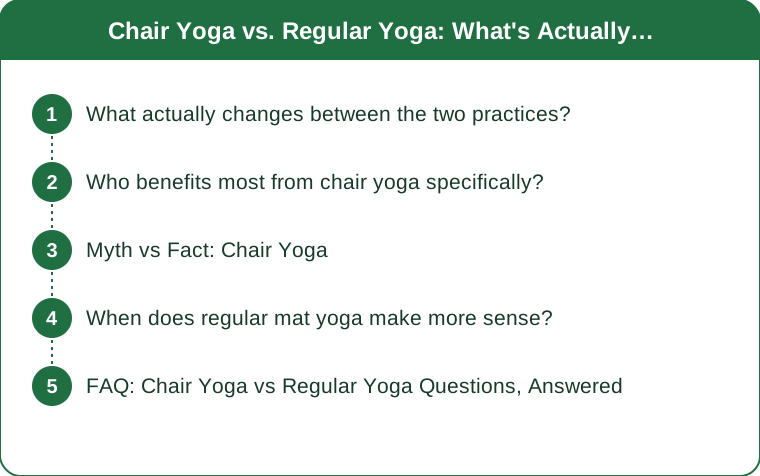
What actually changes between the two practices?
Chair yoga adapts poses to remove the floor-transition and standing-balance demands that mat yoga assumes you can handle — a seated twist replaces a standing twist, a chair-supported forward fold replaces a full floor fold.
The breathing work, mindfulness focus, and many of the stretches themselves carry over largely intact — what changes is primarily the balance and joint-loading demand, not the underlying practice’s core elements.
Who benefits most from chair yoga specifically?
- People with limited mobility or balance concerns, where floor transitions carry real fall risk
- Those recovering from surgery or injury who need reduced joint loading
- Office workers wanting a practical stretch break without changing clothes or using a mat
- Older adults for whom getting up and down from the floor is itself the main barrier to a regular practice, not the stretching
It’s also a reasonable entry point for complete beginners intimidated by a full mat class, regardless of physical limitation.

Myth vs Fact: Chair Yoga
Myth: Chair yoga is only for elderly or injured people. Fact: It’s genuinely useful for anyone wanting a lower-impact practice, including office workers, travelers without floor space, or beginners easing in — age and injury status aren’t prerequisites.
Myth: Chair yoga doesn’t provide real physical benefit. Fact: It measurably improves flexibility, reduces stiffness, and supports stress reduction — the benefits are real, just calibrated to a lower-impact delivery.
Myth: You need to ‘graduate’ from chair yoga to mat yoga to make real progress. Fact: Some people stay with chair yoga long-term by preference or ongoing physical need — it’s not inherently a stepping stone, though it can be one if that fits your goals.
When does regular mat yoga make more sense?
If your goal includes building strength through weight-bearing poses, more significant balance training, or a wider range of inversions and floor sequences, mat yoga offers range chair yoga structurally can’t replicate.
If mobility and balance aren’t limiting factors for you, mat yoga also tends to build more full-body strength per session, since more of your bodyweight is actively engaged across a wider range of poses.
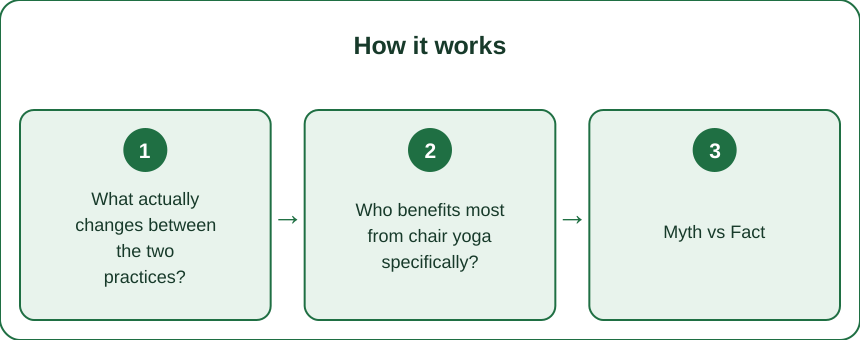
FAQ: Chair Yoga vs Regular Yoga Questions, Answered
Can I switch between chair yoga and mat yoga depending on the day?
Yes — many practitioners use chair yoga on low-energy or joint-flare days and mat yoga otherwise, treating them as complementary rather than exclusive.
Does chair yoga count as real exercise?
Yes — it provides measurable flexibility, circulation, and stress-reduction benefits, even though the intensity is generally lower than a full mat practice.
Is chair yoga appropriate during pregnancy or recovery from injury?
Often yes, but check with your provider for your specific situation — the reduced balance and floor-transition demands make it a reasonable option in many recovery contexts. This is general information, not medical advice.
TL;DR:
- Chair yoga adapts poses to remove floor transitions and heavy balance demands
- It’s genuinely useful beyond just older adults — office workers and beginners benefit too
- The core practice (breathing, mindfulness, stretching) carries over largely intact
- Mat yoga offers more range for strength and balance goals once those aren’t limiting factors
This is general information, not medical advice — the right choice depends on your body’s current needs, not a hierarchy between the two.
See It in Motion
Seen here: Racerback Tank Top - White — shop similar styles on bubblelime.com
Keep Reading
This article is for general informational purposes only and is not medical advice. Always consult a qualified health professional for guidance specific to you.