Chair Yoga for Balance: The Standing-Supported Bridge to Steadiness
Chair yoga’s best-kept secret isn’t the seated poses — it’s the chair as a balance handrail: the supported standing series that rebuilds steadiness with a safety net attached. The bridge from seated to steady, and the fall-prevention evidence behind it.
The Chair as Balance Equipment
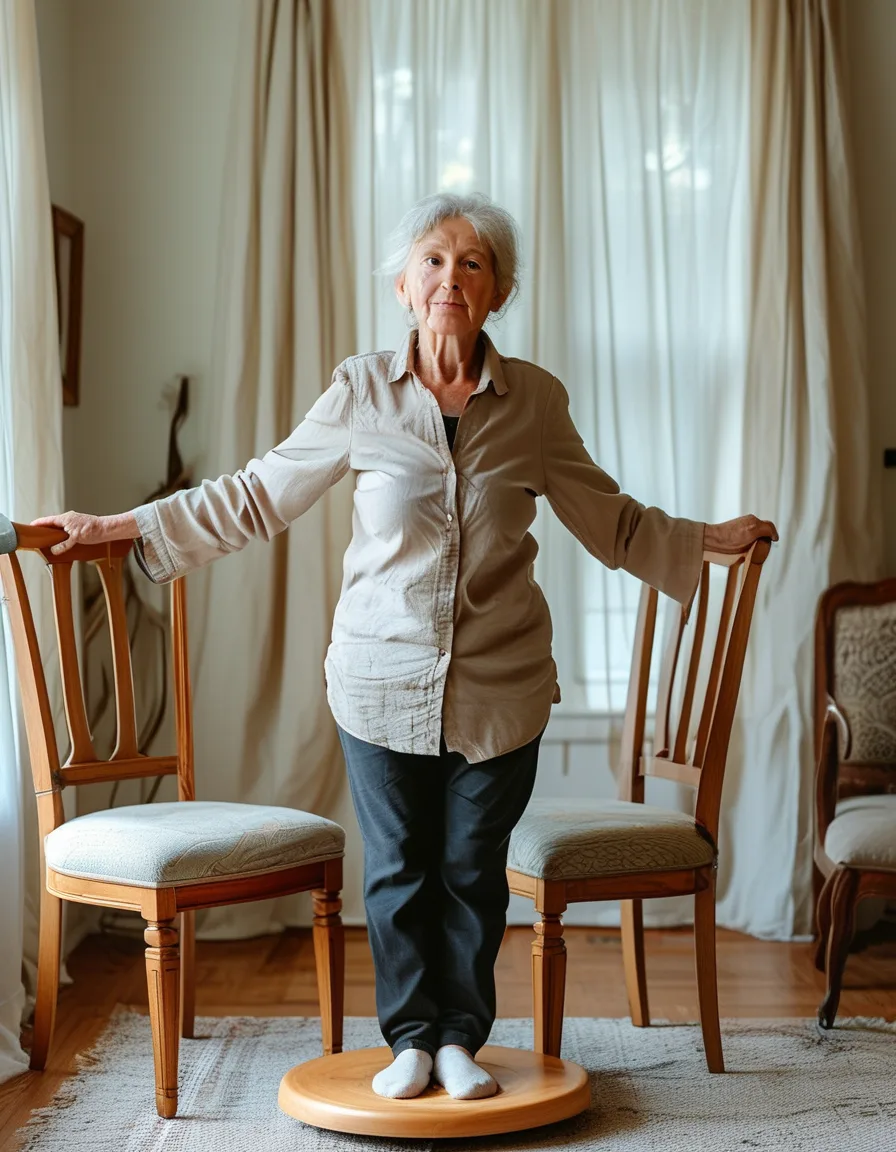
The reframe: the chair back is a professional-grade balance aid (the barre studios charge for exactly this — a stable handhold at the right height; the kitchen counter and the sturdy chair are the home versions), the support spectrum is the progression (two hands → one hand → fingertips → hovering — the same pose travels the whole journey from supported to free; the chair lets balance training start wherever today’s steadiness actually is), and the confidence mechanics (fear of falling itself degrades balance — the stiffened, cautious gait is a risk factor; the handhold’s psychological safety lets the body practice loosely, which is how balance actually improves).
The Supported Standing Series
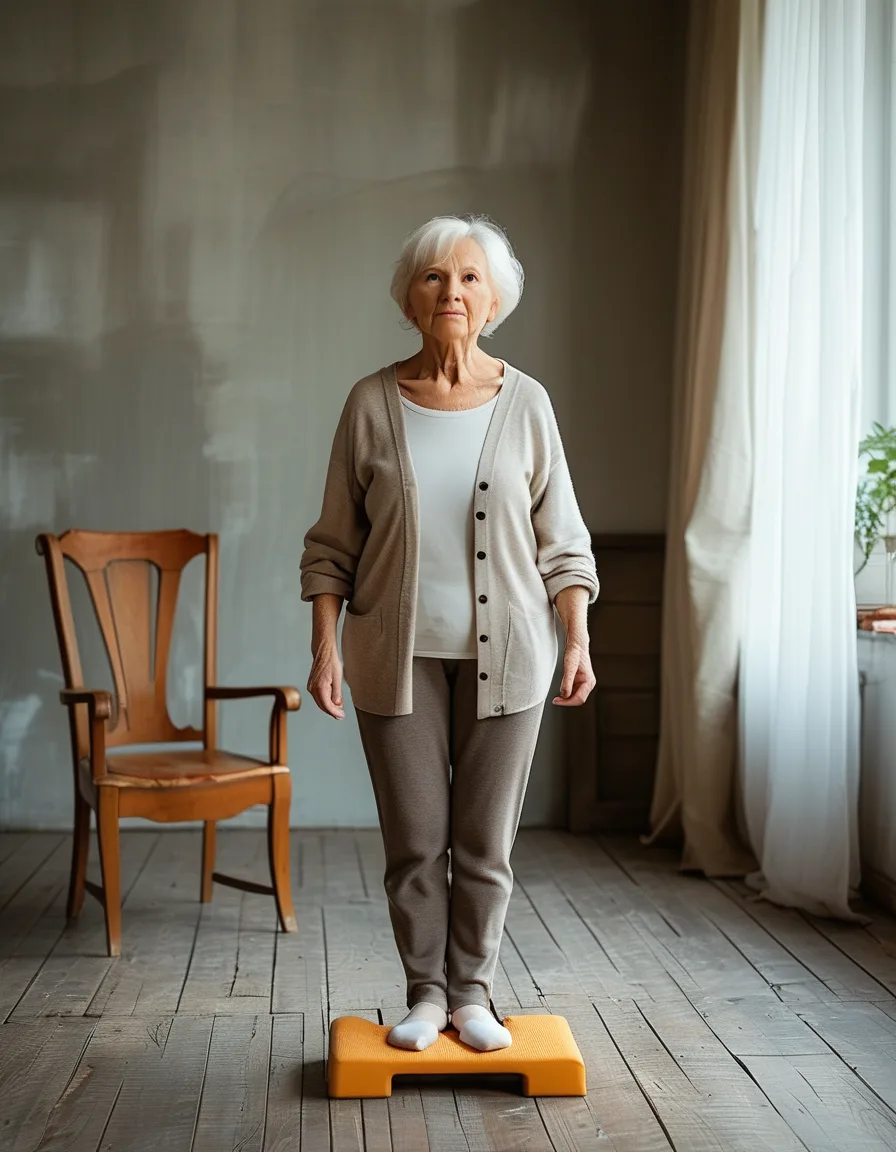
The core sequence (behind the chair, both hands to start): supported mountain with heel raises ×10 (the calf-and-ankle wake-up), the supported tree (one foot to the ankle or calf — never the knee; the classic balance pose with insurance), standing hip circles and leg swings (the mobility-balance combination), the supported quarter-squat sit-backs ×8 (the sit-to-stand strength that IS fall prevention), the heel-to-toe stand (the tandem stance from the balance-testing world, chair-assisted), and the finisher walk (heel-to-toe steps along the chair-and-counter line — the sobriety walk as training). Ten minutes, every pose scalable by grip.
The Progression Protocol
Advancing safely: the grip-lightening ladder (weeks at two hands, then one, then fingertips — the wobble should be present-but-manageable at every stage; no wobble means lighten the grip, near-falls mean re-grip), the eyes-and-head layer (the vestibular additions — head turns during supported stands, then brief eye-closes at the strongest poses; the inner-ear training with a handrail), the surface progression (hard floor, then carpet, then the folded-towel tier — the instability graduates too), and the retest ritual (the monthly single-leg-stand timing — the number moving is the motivation; balance improvements show fast and measurably).
The Evidence and the Frame
Why this matters: the fall-prevention research crowns exercise (balance-and-strength programs reduce falls meaningfully in older adults — the most evidence-backed intervention there is; chair-supported work is exactly how those programs start), the tai-chi adjacency (the slow weight-shifting the research loves — chair yoga’s standing series trains the same currency), the daily-dose logic (short and frequent beats long and rare — the coffee-brew balance minute and the ten-minute series, most days), and the independence framing (balance is the skill that keeps every other freedom — the chair series isn’t exercise for its own sake; it’s the insurance policy on decades of errands, gardens and grandkid-chasing). The chair was the training wheels all along — and training wheels come off gradually, on purpose.
Two hands to fingertips, tree with insurance, retest monthly, daily short doses. Chair-supported balance training is fall prevention with receipts — steady is a skill, and the chair teaches it.
See It in Motion
Seen here: Racerback Tank Top - White — shop similar styles on bubblelime.com
Keep Reading
This article is for general informational purposes only and is not medical advice. Always consult a qualified health professional for guidance specific to you.