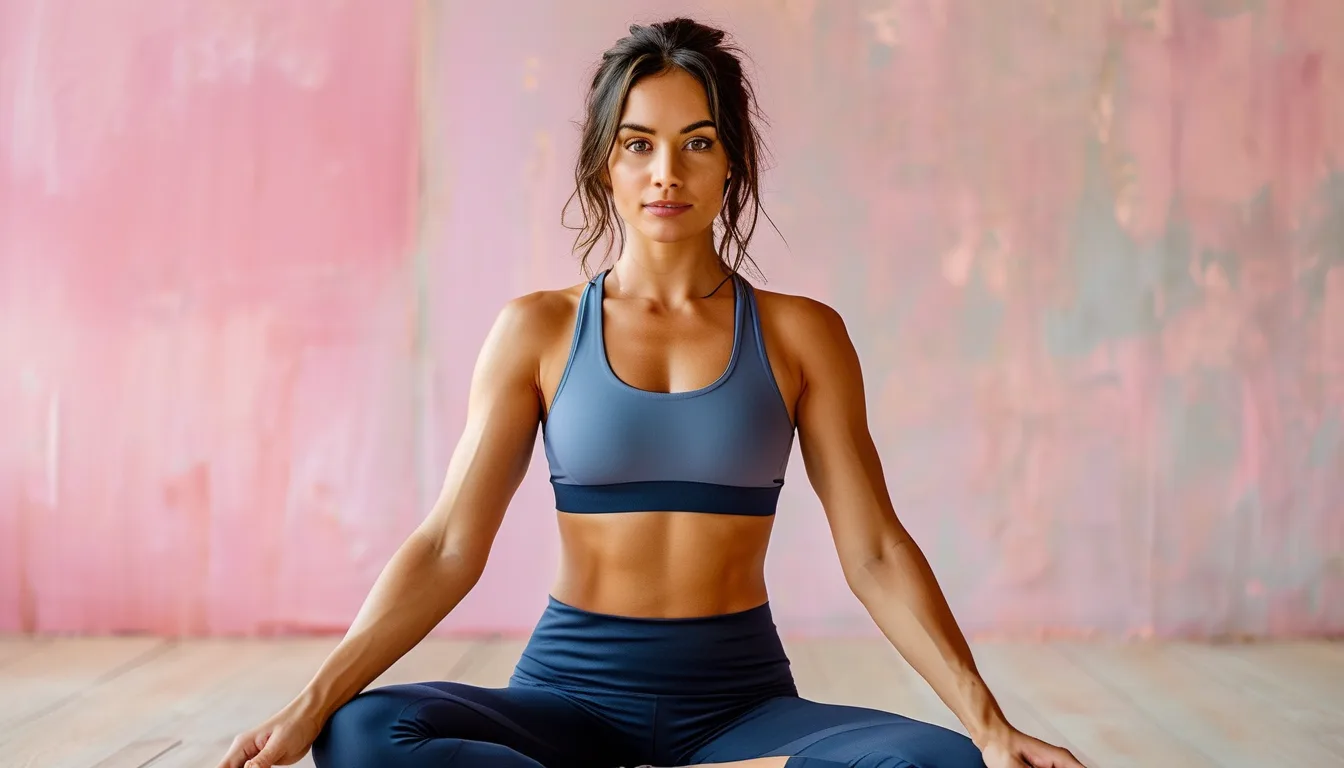
Chair Yoga for Flights: Stretches You Can Actually Do in an Airplane Seat
Quick Answer: Airplane chair yoga needs to work within a narrower seat and armrests than a home or office chair, so the most useful moves are ankle circles, seated spinal twists, shoulder rolls, and gentle neck stretches — all done without needing to extend your arms or legs into the aisle or the seat in front of you.
Most chair yoga content assumes a normal office chair with full range of motion around you, which doesn’t translate directly to a cramped economy seat wedged between armrests and a tray table.
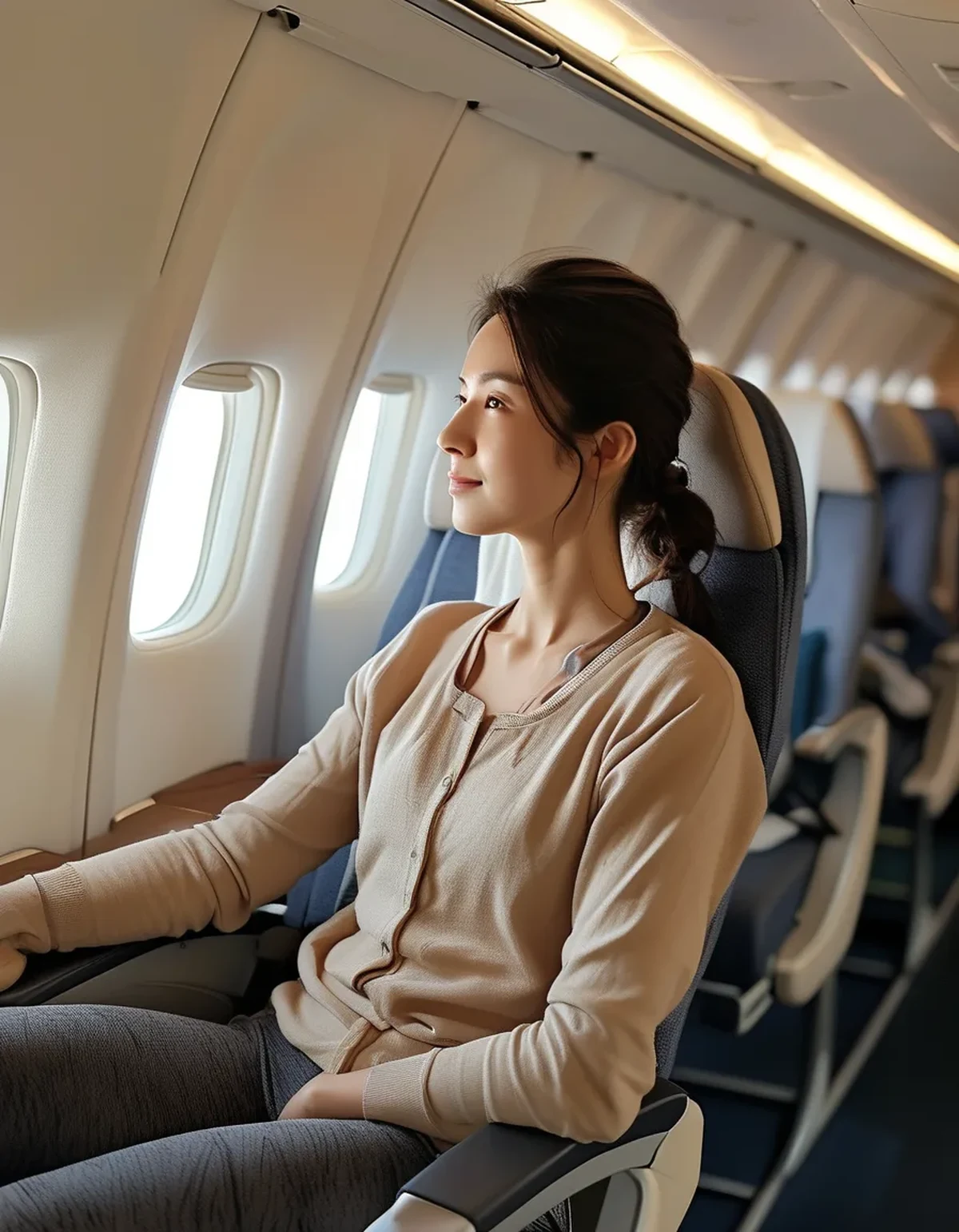
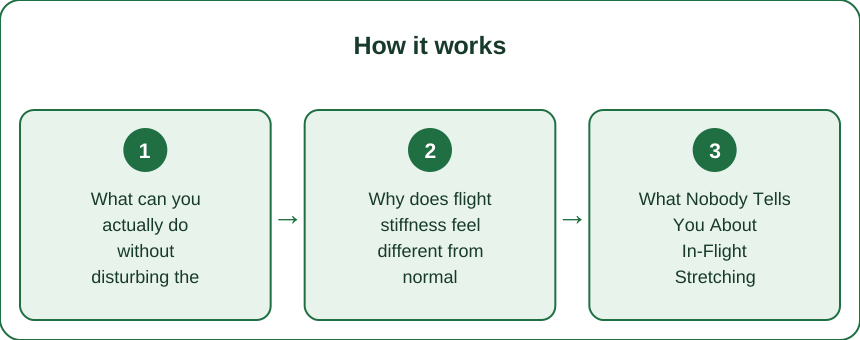
What can you actually do without disturbing the person next to you?
Seated spinal twists (one hand on each armrest, gently rotating your torso toward each side) and shoulder rolls both fit entirely within your own seat space and don’t require arm extension into a neighbor’s area, making them among the most practical flight-specific options.
Ankle circles and calf pumps (flexing and pointing your feet, rotating ankles) also work fully seated and specifically target the circulation concerns unique to long periods of immobility during flights.
Why does flight stiffness feel different from normal desk-sitting stiffness?
Cabin pressure changes, dry air, and prolonged immobility in a narrower seat than most desk chairs combine to create both muscular stiffness and mild circulation sluggishness — the combination is why flight stiffness often feels more pervasive than a normal day of desk sitting, even over a shorter time period.
This is also why seated leg and ankle movement gets specifically recommended for flights beyond general comfort — it directly addresses the circulation component that desk-chair stiffness doesn’t usually involve as prominently.
What Nobody Tells You About In-Flight Stretching
Getting up to walk the aisle every 1-2 hours matters more for circulation than any seated stretch alone, but seated chair yoga movements are genuinely useful for the stretches between those walks, and for turbulence periods when the seatbelt sign makes walking impossible.
Doing a few seated movements before dozing off on a flight can also reduce how stiff you feel upon waking mid-flight, since starting from a slightly looser state changes how the stiffness accumulates during sleep in a seated position.
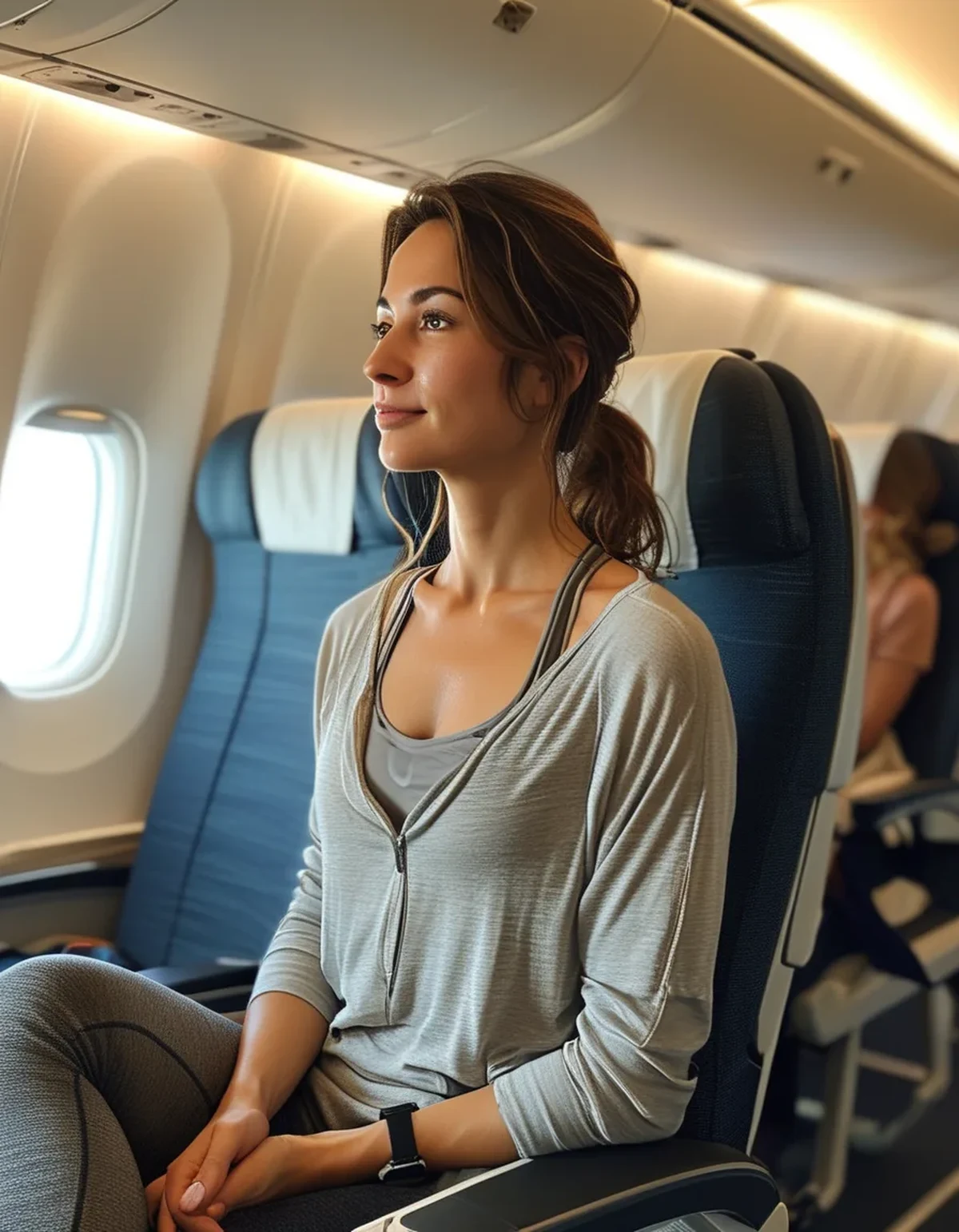
How do you do a neck stretch without looking like you’re having a medical moment?
A subtle ear-to-shoulder tilt (gently lowering one ear toward the same-side shoulder, holding briefly, switching sides) reads as a normal small movement rather than a dramatic stretch, and it directly addresses the neck tension that builds from hours of a fixed head position against a seat or window.
FAQ: In-Flight Chair Yoga Questions, Answered
How often should I do these movements during a long flight?
Every hour or so, alongside getting up to walk when the seatbelt sign allows, covers most of the stiffness and circulation benefit without needing a strict schedule.
Are these movements enough to prevent leg swelling on long flights?
They help, particularly ankle and calf movements, but walking the aisle periodically remains the more effective circulation strategy — seated movements are a supplement for when walking isn’t possible, not a full replacement.
Can I do these in a middle seat without bothering people on both sides?
Yes — all the movements described stay within your own seat space and don’t require arm or leg extension outside your immediate area, making them workable even in a full middle seat.
TL;DR:
- Seated spinal twists, shoulder rolls, and ankle circles all fit within a normal airplane seat
- Flight stiffness combines muscular tightness with circulation sluggishness from pressure and immobility
- These movements supplement aisle walks — they don’t replace getting up periodically
- A subtle ear-to-shoulder neck tilt addresses fixed-position neck tension without drawing attention
A cramped airplane seat isn’t actually a dead end for staying comfortable — it just needs a version of chair yoga built for the space you’ve actually got.
See It in Motion
Keep Reading
This article is for general informational purposes only and is not medical advice. Always consult a qualified health professional for guidance specific to you.