Chair Yoga Adapted for Standing Desk Workers (Yes, It Still Applies)
Chair yoga content assumes sitting for hours as the default problem, and a growing number of office workers have switched to standing desks instead — which trades one set of tension patterns for a genuinely different one, not a solved problem. Chair yoga principles still apply, they just need real adaptation. Here is why standing desk workers face a different but equally real strain pattern, and the specific sequence that actually addresses it.

Why Standing Desk Workers Face a Different but Equally Real Tension Pattern
The shifted strain profile: the the-lower-body-and-feet-bear-a-new-kind-of-static-load (the standing desk trading seated hip and lower back compression for sustained static load on feet, ankles and knees over the same total hours, per the desk-chair-yoga-workday contrasting logic — the different-body-parts-now-bear-the-static-strain), the the-weight-shifting-habits-create-their-own-asymmetry (the tendency to lean or shift weight predominantly onto one leg over long standing periods creating a real, cumulative asymmetric strain pattern, similar in principle to any repetitive one-sided load — the habitual-weight-shifting-creates-a-new-asymmetry-problem), the the-lower-back-strain-doesnt-disappear-it-changes-character (the lower back still under real strain while standing, just from a different mechanism — sustained upright postural holding rather than compressed seated flexion — the lower-back-is-still-involved-just-differently), the the-circulation-and-swelling-in-the-legs-becomes-more-relevant (the prolonged standing specifically increasing risk of leg and foot fatigue or mild swelling in a way prolonged sitting doesn’t in the same way — the circulation-concerns-shift-from-hip-flexors-to-legs-and-feet), the the-neck-and-shoulder-strain-often-persists-regardless-of-sitting-or-standing (the screen height and shoulder posture issues, per the chair-yoga-neck-shoulders-guide logic, remaining largely the same problem whether the desk is sitting or standing height, since screen position drives it more than sitting posture does — the neck-and-shoulder-strain-transfers-across-both-desk-types-mostly-unchanged), and the reframe (the switch to standing as trading one specific strain pattern for another, not eliminating the underlying need for regular movement and stretching breaks).
How to Adapt Chair Yoga Movements for a Standing Context
The specific adaptation logic: the use-the-chair-as-a-support-prop-rather-than-a-seat (the chair still being genuinely useful for a standing worker, just repurposed as a balance support or a surface for seated-adjacent stretches taken briefly during a standing shift — the the-chair-becomes-a-prop-not-the-primary-seat), the the-shift-focus-toward-foot-ankle-and-calf-specific-movements (the emphasizing ankle circles, calf raises and foot stretches that address the new standing-specific strain zones, in place of the hip-opening emphasis more relevant to seated strain — the rebalance-the-movement-focus-toward-the-new-strain-areas), the the-keep-the-neck-and-shoulder-sequence-largely-unchanged (the neck and shoulder chair yoga movements transferring almost directly to a standing context since that strain source doesn’t meaningfully differ between the two setups — the this-part-of-the-routine-barely-needs-adapting), the the-add-a-brief-seated-reset-using-the-chair-periodically (the deliberately sitting briefly during a standing-desk day specifically to reverse the standing-specific static load pattern, using the original chair yoga sequence as that seated reset — the a-brief-seated-break-serves-a-real-restorative-purpose-for-standing-workers-too), the the-address-weight-shifting-asymmetry-directly (the adding a specific movement or awareness practice aimed at correcting habitual one-sided weight shifting, a strain source that seated chair yoga never needed to address at all — the a-genuinely-new-movement-category-for-the-standing-specific-problem), and the frame (the adaptation as repurposing the chair as a support prop, shifting focus toward feet ankles and calves, keeping the neck and shoulder sequence largely as-is, adding a periodic brief seated reset, and adding a new movement specifically for weight-shifting asymmetry — chair yoga’s underlying principle of frequent brief movement breaks survives the desk-type switch even though the specific movements shift).
The Specific Sequence That Actually Addresses Standing-Specific Strain
A practical routine: the ankle-circles-and-calf-raises-every-hour (the a brief set of ankle circles and calf raises addressing the new lower-leg static load directly, taking under a minute and requiring no equipment beyond standing space — the the-single-highest-value-standing-specific-addition), the the-a-brief-seated-hip-and-lower-back-release-using-the-chair (the sitting briefly and moving through a simple hip and lower back release, borrowed directly from standard chair yoga, specifically to counter the standing day’s cumulative upright postural holding — the borrow-the-original-chair-yoga-sequence-for-this-specific-reset), the the-weight-shift-awareness-practice (the deliberately and evenly redistributing weight between both feet several times through the day, paired with a brief single-leg balance check using the chair for support, directly addressing the asymmetry risk — the a-deliberate-even-weight-practice-addresses-a-standing-specific-problem-directly), the the-shoulder-rolls-and-neck-stretches-unchanged-from-standard-chair-yoga (the same shoulder and neck movements from seated chair yoga applying directly without modification, since screen height and posture drive this strain regardless of desk type — the reuse-this-part-of-the-routine-exactly-as-is), the the-a-longer-seated-break-at-a-natural-midpoint-in-the-day (the one longer, several-minute seated break at a natural workday midpoint specifically to give the legs and feet genuine recovery time beyond the brief hourly resets — the one-longer-seated-break-covers-what-the-brief-resets-cant-fully-address), and the frame (the standing-adapted sequence as hourly ankle and calf work, a brief chair-based hip and lower back release, deliberate weight-shift awareness, unchanged shoulder and neck stretches, and one longer midday seated break — a genuinely complete adaptation, not a token gesture toward standing desk workers).
Standing desks trade seated hip and lower back compression for a genuinely different strain pattern rather than solving the underlying problem — sustained static load shifts to the feet, ankles and knees, habitual weight shifting onto one leg creates a new cumulative asymmetry, and circulation concerns move from hip flexors to the legs and feet, while neck and shoulder strain from screen height largely persists unchanged regardless of desk type. Adapting chair yoga for this context means repurposing the chair as a balance support prop rather than the primary seat, shifting movement focus toward ankle circles, calf raises and foot stretches that address the new standing-specific strain zones, keeping the neck and shoulder sequence almost entirely as-is since that strain source doesn’t change, and adding a genuinely new practice around correcting habitual one-sided weight shifting. A complete standing-adapted routine includes hourly ankle and calf work, a brief chair-based hip and lower back release borrowed directly from standard chair yoga, deliberate even weight-shift awareness through the day, unchanged shoulder rolls and neck stretches, and one longer seated break at the workday’s midpoint to give the legs genuine recovery time beyond the brief hourly resets.
See It in Motion
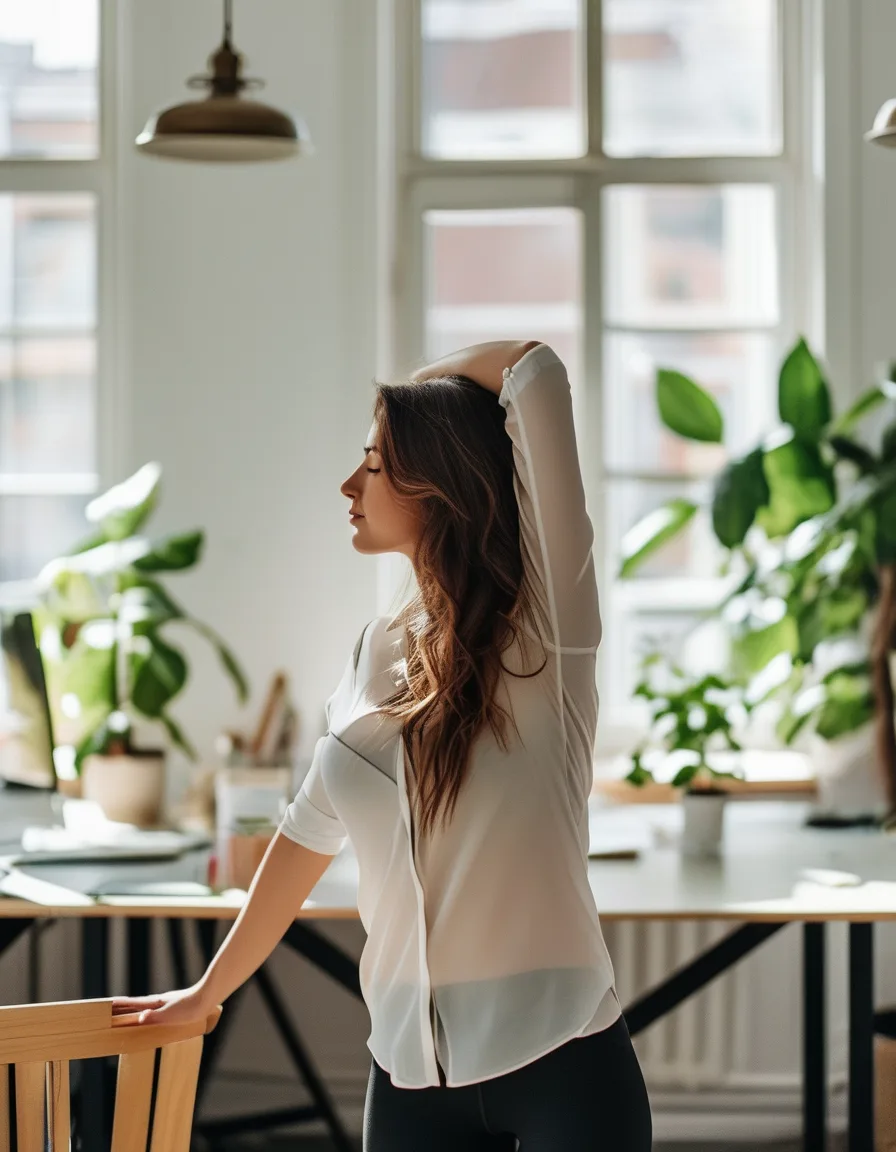
Seen here: Bootcut Capri Yoga Pants with Pockets — shop similar styles on bubblelime.com
Keep Reading
This article is for general informational purposes only and is not medical advice. Always consult a qualified health professional for guidance specific to you.