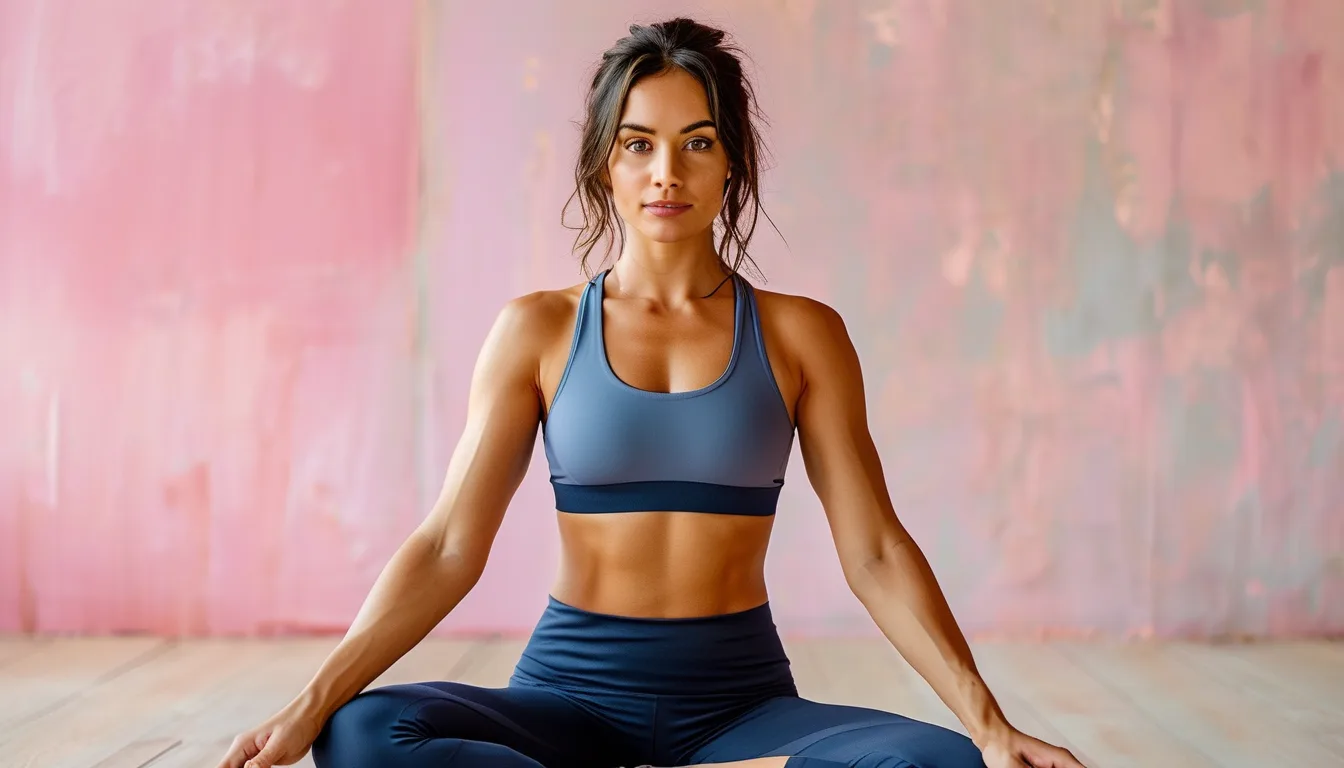
The Chair Yoga Moves You Can Do Without Anyone Noticing You're Doing Yoga
Chair yoga’s biggest barrier in an actual office isn’t the movements themselves, it’s the self-consciousness of visibly stretching or twisting at a shared desk in front of coworkers. The solution isn’t to skip it, it’s to choose moves subtle enough to pass as normal fidgeting. Here is why discretion determines whether office chair yoga actually gets used, the specific moves that genuinely go unnoticed, and how to fit them into a workday without needing a dedicated break.

Why Discretion Determines Whether It Actually Gets Used
The real adoption barrier: the the-visibility-concern-outweighs-the-difficulty-concern (the actual obstacle to workday chair yoga being social self-consciousness far more than the physical difficulty of the movements themselves — the it’s-a-social-barrier-not-a-fitness-barrier), the the-open-office-layouts-increase-the-self-consciousness-factor (the modern open-plan offices making any visibly unusual movement far more noticeable than a private office would — the office-layout-shapes-what’s-actually-usable), the the-a-technique-that-feels-embarrassing-gets-abandoned-fast (the even genuinely effective stretches getting skipped entirely if they consistently trigger self-consciousness — the effectiveness-doesn’t-matter-if-it-doesn’t-get-done), the the-discreet-moves-can-be-done-far-more-frequently (the a move that looks like normal fidgeting being usable many times a day rather than saved for a rare private moment — the frequency-goes-up-when-visibility-concern-goes-down), the the-most-chair-yoga-content-assumes-privacy-that-doesn’t-exist-at-work (the general chair yoga guidance from the chair-yoga-complete-guide logic often designed for home use, not adapted for an observed office setting — the home-oriented-content-needs-office-specific-adaptation), and the reframe (the real design constraint as passing as unremarkable, not just being effective — a move that works perfectly but looks obviously like yoga will get used far less than a less dramatic move that actually gets repeated all day)).

The Specific Discreet Moves That Work
What actually passes unnoticed: the seated-spinal-twists-done-small (the a subtle, small-range seated twist looking like a normal repositioning shift rather than an obvious stretch — the small-range-twists-read-as-normal-movement), the the-shoulder-rolls-and-neck-tilts (the small shoulder rolls and gentle neck tilts reading as ordinary tension release that coworkers do unconsciously all the time — the these-already-look-completely-normal-to-anyone-watching), the the-seated-ankle-circles-under-the-desk (the ankle circles and foot flexes happening entirely below desk level, invisible to anyone else in the room — the under-desk-movement-is-inherently-discreet), the the-subtle-seated-forward-fold-during-a-call (the a mild forward lean, especially during a phone call with cameras off, releasing lower back tension without visible strangeness — the timing-it-to-camera-off-moments-adds-an-extra-layer-of-discretion), the the-isometric-core-and-glute-engagement (the gently engaging core or glute muscles isometrically while seated, producing zero visible movement at all — the isometric-engagement-is-the-most-discreet-option-of-all-since-nothing-visibly-moves), and the frame (the discreet moves as small seated twists, shoulder rolls and neck tilts, under-desk ankle work, a subtle forward lean during calls, and isometric engagement — a full set of options that read as normal desk behavior rather than an obvious stretching routine).
How to Build Them Into a Workday Without a Dedicated Break
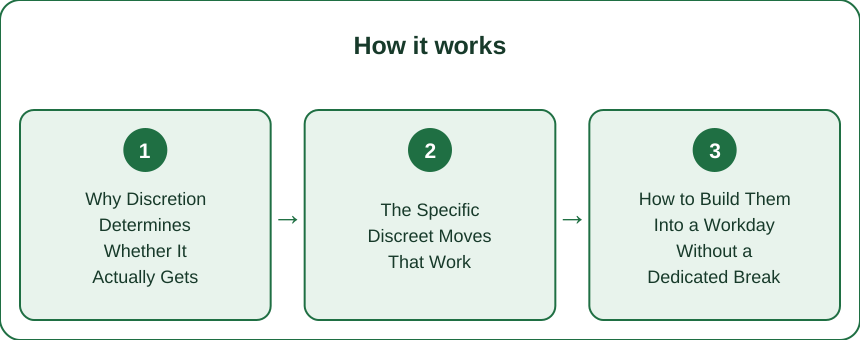
The practical integration: the attach-moves-to-existing-triggers (the linking a specific discreet move to something that already happens repeatedly — the end of an email, a meeting transition — rather than needing a separate scheduled break from the desk-chair-yoga-workday logic — the habit-stacking-removes-the-need-for-a-dedicated-slot), the the-use-call-and-meeting-downtime-specifically (the doing subtler moves specifically during moments of lower visual attention, like listening rather than speaking on a call — the low-attention-moments-are-the-easiest-window), the the-rotate-through-a-small-set-rather-than-one-move-repeated (the cycling through a handful of discreet moves across the day rather than relying on just one, covering more of the body over time — the variety-covers-more-tension-points-across-a-full-day), the the-no-need-to-announce-or-explain-it (the simply doing the movement without narrating or explaining it to nearby coworkers, since explanation itself increases the visibility and self-consciousness — the not-explaining-it-keeps-it-actually-discreet), the the-a-few-seconds-many-times-beats-one-longer-session (the frequent brief moments adding up to more total relief than a single longer stretch session that requires stepping away — the frequency-beats-duration-for-this-specific-use-case), and the frame (the integration method as attaching moves to existing triggers, using low-attention windows during calls, rotating through several moves, skipping any explanation, and favoring frequent brief moments over one longer session — the whole point is that it never needs to look like a break at all).
Office chair yoga’s real barrier is social self-consciousness about visibly stretching in front of coworkers, not the physical difficulty of the moves themselves — which means the moves that actually get used are the ones subtle enough to pass as ordinary fidgeting rather than the most technically effective ones. Small-range seated twists, shoulder rolls and neck tilts, under-desk ankle circles, a mild forward lean during camera-off calls, and isometric core or glute engagement that produces zero visible movement all read as completely normal desk behavior. Build them into a workday by attaching each move to something that already happens repeatedly, like the end of an email or a meeting transition, using the lower-attention moments of a call to do them, rotating through several moves rather than repeating just one, and never explaining or narrating the movement — frequent brief moments that never look like a break add up to more relief than one longer session that requires stepping away.
See It in Motion
Seen here: Bootcut Capri Yoga Pants with Pockets — shop similar styles on bubblelime.com
Keep Reading
This article is for general informational purposes only and is not medical advice. Always consult a qualified health professional for guidance specific to you.